In 2026, the battle between Grok and ChatGPT is heating up. Grok, Elon Musk’s witty AI, leans on real-time X integration and sharp reasoning, while ChatGPT shines with smooth writing, versatile coding, and enterprise tools. Here’s a clear look at how they stack up and which one fits you best.
Key Takeaway
Choose Grok if:
- You want real-time insights from X (Twitter) built directly into your AI.
- Your focus is on reasoning-heavy tasks, Python, and logic-based coding.
- You prefer a chatbot with a witty, bold personality rather than a neutral tone.
- You’re open to edgy creativity in image and video generation.
Choose ChatGPT if:
- You need a versatile AI for multi-language coding, essays, translation, and business tasks.
- You value smooth, natural writing and adaptable tone for professional or creative work.
- You want access to image generation (GPT-4o & DALL·E 3) in a safe environment.
- You require enterprise-ready features like Teams, admin tools, and stricter moderation.
Grok vs ChatGPT: Comprehensive Comparison
| Feature / Point | Grok (xAI) | ChatGPT (OpenAI) |
|---|---|---|
| Best For | - X (Twitter) power-users - Developers focused on reasoning & Python - Users wanting bold or edgy creativity - Real-time trend monitoring | - Students, writers, professionals - Teams needing reliable AI for work - Developers needing multi-language coding + ADA - Businesses requiring safety & enterprise features |
| Latest Model (2025) | ⭐⭐⭐⭐☆ — Grok 4 (SuperGrok Heavy option with boosted compute) | ⭐⭐⭐⭐⭐ — GPT-5 (latest multimodal model, enterprise-ready) |
| Core Focus | ⭐⭐⭐⭐☆ — Reasoning-first, witty, real-time assistant tied to X | ⭐⭐⭐⭐⭐ — Polished all-round AI for coding, writing, and business |
| Reasoning & Logic | ⭐⭐⭐⭐⭐ — Excels in math, logic, and structured problem-solving | ⭐⭐⭐⭐☆ — Strong reasoning, slightly behind Grok in benchmarks |
| Coding Accuracy (Python) | ⭐⭐⭐⭐⭐ — Very high first-try accuracy in Python, debugging, and algorithms | ⭐⭐⭐⭐☆ — Reliable coding, broader coverage across tasks |
| Multi-Language Coding | ⭐⭐☆☆☆ — Narrower focus on Python, less coverage outside core languages | ⭐⭐⭐⭐⭐ — Supports Python, JS, SQL, C++, HTML and more |
| Coding Tools (Execution/ADA) | ⭐⭐☆☆☆ — No native code execution environment | ⭐⭐⭐⭐⭐ — Advanced Data Analysis: run Python, upload files, generate charts |
| Writing Style | ⭐⭐⭐☆ — Structured and logical, but tone can feel stiff; witty at times | ⭐⭐⭐⭐⭐ — Natural, fluent, and adaptive across essay, creative, and professional writing |
| Creativity | ⭐⭐⭐⭐ — Bold, edgy, sometimes controversial outputs | ⭐⭐⭐⭐⭐ — Safer, polished creativity adaptable to many styles |
| Image Generation | ⭐⭐⭐⭐☆ — Aurora model for images; Grok Imagine adds video | ⭐⭐⭐⭐⭐ — GPT-4o and DALL·E 3; accurate, safe, great with text rendering |
| Video Generation | ⭐⭐⭐⭐ — Grok Imagine supports video generation | ⭐⭐☆☆☆ — Limited; not a core feature |
| Real-Time Search | ⭐⭐⭐⭐⭐ — Deep integration with X (Twitter), best for trending info | ⭐⭐⭐⭐ — ChatGPT Search + browsing agents; general web access |
| Benchmarks | ⭐⭐⭐⭐⭐ — Reported top results in reasoning/maths (AIME, GPQA) | ⭐⭐⭐⭐☆ — Consistently strong, less marketing focus on leaderboards |
| Translation (Chinese–English) | ⭐⭐⭐⭐⭐ — Very strong in Chinese–English, accurate literal translations | ⭐⭐⭐⭐☆ — Strong overall but less optimized for Chinese-specific tasks |
| Translation (Global) | ⭐⭐☆☆☆ — Limited coverage beyond core languages | ⭐⭐⭐⭐⭐ — Broad multilingual fluency with idioms and tone adaptation |
| Enterprise Integration | ⭐⭐☆☆☆ — Early-stage; mostly tied to X | ⭐⭐⭐⭐⭐ — Mature enterprise features, Teams, and admin tools |
| Pricing (Consumer) | ⭐⭐⭐☆ — $40/mo (X Premium+); $300/mo (SuperGrok Heavy) | ⭐⭐⭐⭐⭐ — Free tier available; Plus $20/mo; Team & Enterprise plans |
| API Pricing | ⭐⭐⭐⭐⭐ — Lower, developer-friendly pricing | ⭐⭐⭐⭐ — Higher, but reliable and globally scalable |
| Moderation & Safety | ⭐⭐☆☆☆ — Loose moderation; “Spicy mode” allows NSFW & controversial outputs | ⭐⭐⭐⭐⭐ — Strict moderation, enterprise-safe |
| Personality | ⭐⭐⭐⭐⭐ — Witty, sarcastic, opinionated; strong “character” | ⭐⭐⭐⭐☆ — Neutral, adaptive tone suitable for all contexts |
| Open Source | ⭐⭐⭐⭐☆ — Partial open models released | ⭐☆☆☆☆ — Closed-source, proprietary |
Table of Contents
What Are Grok and ChatGPT?
ChatGPT
Launched by OpenAI in 2022, ChatGPT quickly became the world’s most widely used AI chatbot. It has gone through several major upgrades:
- GPT-3.5 (2022): The first mainstream release that sparked global adoption.
- GPT-4 (2023): Smarter, more accurate, with stronger multilingual support.
- GPT-4o (2024): A multimodal leap — handling text, voice, and images in one model.
- GPT-5 (2025): The newest version, designed with stronger reasoning, longer context handling, and better efficiency.
Over time, ChatGPT has matured far beyond casual chatting. It now powers Advanced Data Analysis (ADA) for coding and file work, supports plugins, integrates into enterprise workflows, and delivers multimodal capabilities. Today, it’s trusted by students, developers, businesses, and entire teams worldwide.
Grok
Grok, developed by Elon Musk’s xAI in 2023, takes a very different approach. Unlike ChatGPT’s polished, neutral style, Grok is known for its witty, sarcastic, and opinionated personality. It’s deeply tied to the X (Twitter) ecosystem, giving it real-time access to trending topics, user conversations, and social insights.
The latest release, Grok 4 (2025), pushes reasoning accuracy and real-time search even further. With the premium SuperGrok Heavy ($300/month) tier, users can unlock more compute power and advanced reasoning capabilities. On top of that, xAI has rolled out Aurora for text-to-image generation and Grok Imagine, which can even create short videos — features that position Grok as both a social AI assistant and a reasoning powerhouse, and as a more daring counterpart to ChatGPT’s enterprise-focused polish.
Benchmarks & Reasoning
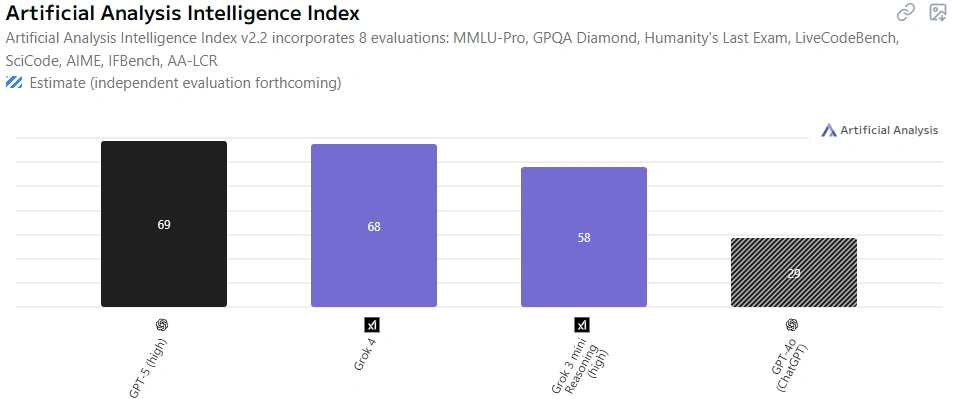
Benchmarks are where we see the clearest philosophical split between Grok and ChatGPT. Grok 4 and Grok 4 Heavy were built by xAI to prioritize chain-of-thought accuracy and deep reasoning. In math and scientific tests, Grok posts some of the best scores ever seen, positioning itself as a reasoning powerhouse. ChatGPT-5, on the other hand, delivers more balanced results across a wide range of benchmarks, with a strong emphasis on practical reasoning that ties directly into real-world coding and multi-language use.
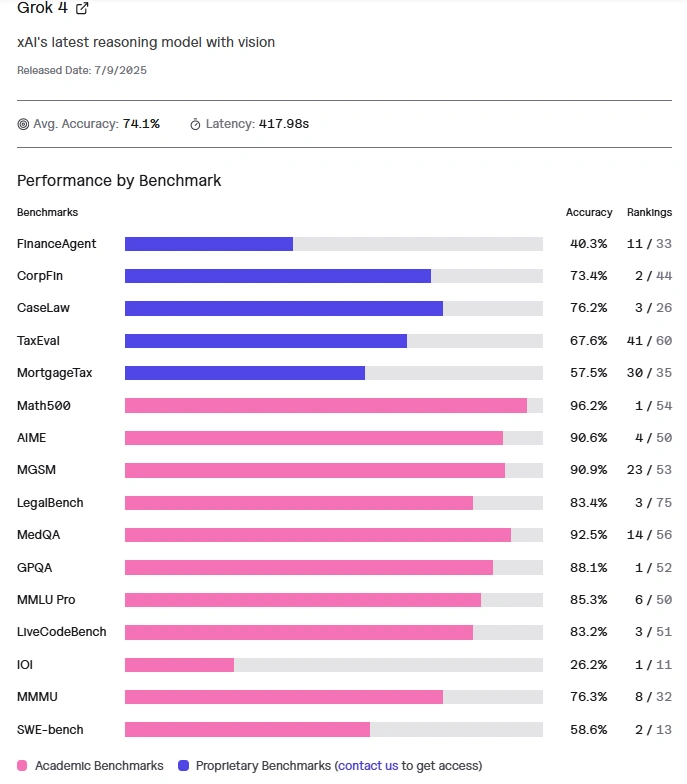
Grok 4 / Heavy:
- AIME (math benchmark): 90.6% accuracy — top of the leaderboard.
- GPQA Diamond (graduate scientific reasoning): 88%.
- Humanity’s Last Exam: 50.7% — a notoriously hard test of logical reasoning.
- USAMO (advanced math): 61.9% with Grok 4 Heavy.
- Optimized for step-by-step problem solving, especially math and logic.
ChatGPT-5:
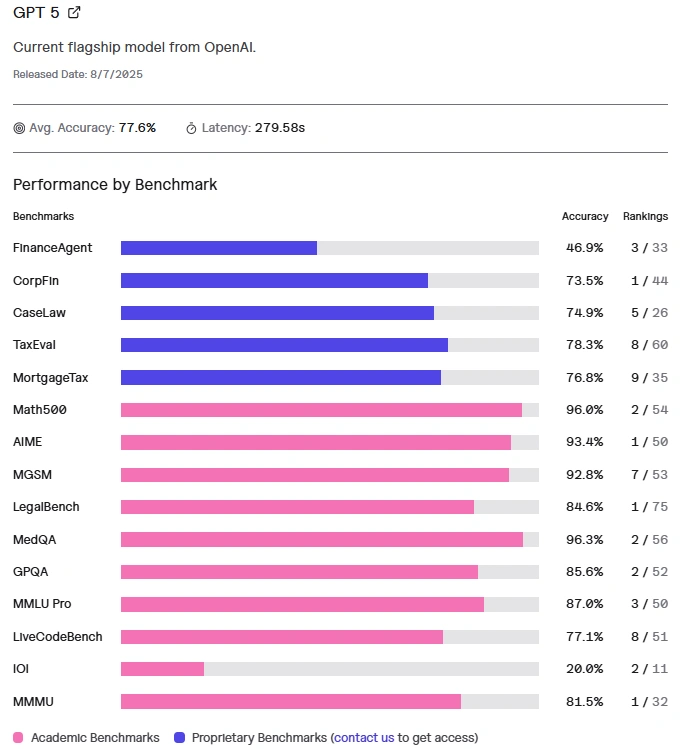
- SWE-bench Verified (real-world Python debugging): 74.9%.
- Aider Polyglot (multilingual coding edits): 88% when reasoning enabled.
- GPQA Diamond: 77.8% baseline → 85.7% with reasoning mode.
- AIME/HMMT math contests: up to 96–100% accuracy with GPT-5 Pro.
- Excels in broad reasoning tasks that mix coding, math, and language.
Coding Performance
When it comes to coding in everyday workflows, the story changes. Grok is sharp at Python and algorithmic reasoning but lacks a built-in coding sandbox or wide language coverage. It’s great if your focus is on math-driven code, but less helpful for full-stack or team development. ChatGPT-5, by contrast, offers a complete developer loop with Advanced Data Analysis (ADA), letting you run Python directly, upload files, generate charts, and debug inside the chat. It’s also multi-language, making it a versatile assistant for different environments.
Grok 4 / Heavy:
- Best at Python logic and debugging tasks.
- Produces step-by-step code solutions with fewer retries.
- Limited support for languages beyond Python.
- No built-in code execution or file handling.
ChatGPT-5:
- ADA (Advanced Data Analysis): run Python code, upload files, generate plots.
- SWE-bench Verified: 74.9% on real GitHub issue solving.
- Supports a broad range of languages (Python, JavaScript, SQL, C++, HTML).
- Seen as a “coding collaborator” — useful for debugging, prototyping, and even frontend design.
Grok vs ChatGPT for Coding
| Category | Grok 4 / Heavy | ChatGPT-5 |
|---|---|---|
| Python Accuracy | Very strong, logic-heavy | Strong, plus multi-language |
| Multi-language Support | Limited | Broad (Python, JS, SQL, HTML, C++) |
| Code Execution | Not supported | Yes (Advanced Data Analysis) |
| SWE-bench Verified | N/A | 74.9% accuracy |
| Developer Workflow | Best for step-by-step reasoning | Best for complete coding + debugging loop |
Writing and Content Generation
Writing is one of the areas where the personalities of Grok and ChatGPT really stand apart. Both can draft essays, reports, and articles, but the tone, fluency, and adaptability they deliver feel quite different.
Grok is designed to be witty and opinionated, and that style often shows in its writing. Its essays tend to be structured and logical, with strong outlines and argument flow. This makes Grok especially good for technical summaries, structured reports, or academic writing, where clarity and step-by-step reasoning are more important than flair. However, its text can sometimes read as stiff or mechanical, lacking the natural rhythm of human writing.
ChatGPT, by contrast, focuses on fluency and adaptability. It can shift seamlessly between academic, casual, persuasive, or creative tones, making it highly flexible for everything from school essays to marketing copy. Its writing style feels more narrative and human-like, with smoother transitions and more engaging phrasing. For users who want polished drafts or content that “reads like a person wrote it,” ChatGPT has a clear edge.
Grok:
- Strengths: Logical, well-structured, clear outlines.
- Weaknesses: Tone can feel rigid or less engaging.
- Best for: Academic summaries, technical documents, step-by-step explanations.
ChatGPT:
- Strengths: Natural flow, adaptive tone, engaging and creative writing.
- Weaknesses: Sometimes prioritizes style over strict logical rigor.
- Best for: Essays, articles, marketing, persuasive, or creative projects.
Verdict: Grok is better for structured, reasoning-driven writing, while ChatGPT is stronger for fluent, polished, and audience-friendly content.
Image and Video Generation
Beyond text and coding, both Grok and ChatGPT have expanded into the creative space with image generation — and in Grok’s case, even video. This is an area where the two tools share similarities but also reveal key differences in moderation, control, and use cases.
Grok introduced Aurora, its own text-to-image model, along with Grok Imagine, which supports both images and short-form video creation. True to its personality, Grok even includes a “Spicy mode” that allows less restricted or controversial outputs. This makes it appealing for experimental or edgy content but also raises concerns for professional users who need consistency and safe results.
ChatGPT integrates GPT-4o image generation alongside DALL·E 3, both known for their high fidelity, accurate text rendering, and strong alignment with prompts. Unlike Grok, ChatGPT’s outputs are tightly moderated, prioritizing safety and reliability over edginess. This makes it a more dependable choice for education, business, and creative industries where professional standards are key.
Grok:
- Features: Aurora (text-to-image), Grok Imagine (image + video).
- Strengths: Supports video, allows freer creativity with fewer restrictions.
- Weaknesses: Moderation is loose; outputs can be unpredictable.
ChatGPT:
- Features: GPT-4o image generation, DALL·E 3.
- Strengths: High-quality images, strong text rendering, safer for professional use.
- Weaknesses: No video generation; stricter filters limit experimental outputs.
Verdict: Grok appeals to users who want experimental, even edgy creative tools (including video), while ChatGPT offers safer, polished image generation for professional and mainstream use.
Real-Time Search and Integrations
One of the biggest differences between Grok and ChatGPT is how they handle live, up-to-date information. This is where Grok leans heavily on its integration with X (Twitter), while ChatGPT takes a more general web-first approach.
Grok is deeply connected to the X platform, giving it direct access to trending posts, conversations, and live updates. This makes Grok especially powerful for users who want immediate context on news, pop culture, or social sentiment. Its real-time search feels like a built-in “social lens,” though it’s limited to what happens on X and inherits the platform’s biases.
ChatGPT uses ChatGPT Search and browsing agents to pull from the wider web. While not tied to one social network, it offers a broader and more neutral set of results. For research, general knowledge, or fact-checking across many sources, ChatGPT provides a more balanced and professional search experience.
Grok:
- Features: Real-time integration with X.
- Strengths: Instant access to trends, conversations, and live context.
- Weaknesses: Narrower scope; tied to one platform.
ChatGPT:
- Features: ChatGPT Search + browsing agents.
- Strengths: Broader web coverage, cited results, professional reliability.
- Weaknesses: Feels less “live” than Grok; slower for trending topics.
Verdict: Grok is unbeatable for real-time, social-driven insights, while ChatGPT is stronger for broad, balanced, and reliable web research.
Pricing Plans: Free and Paid
Pricing is one of the most practical differences between Grok and ChatGPT. While both tools are premium services, they take very different approaches to free access and subscription tiers.
Grok ties its chatbot to the X Premium+ subscription, currently priced at about $40 per month (or $395/year). This unlocks access to Grok across the X platform. For users who want the most advanced reasoning, xAI offers SuperGrok Heavy at $300 per month, which enables expanded compute and better benchmark performance. At the time of writing, Grok does not offer a traditional free tier — access requires paying for Premium+ on X. Its API pricing, however, is generally lower than OpenAI’s, making it attractive for developers.
- Free Plan: None (must subscribe to X Premium+).
- Consumer Plan: X Premium+ – $40/month or $395/year.
- Pro/Heavy Plan: SuperGrok Heavy – $300/month.
- API: Developer-friendly pricing, lower than OpenAI.
ChatGPT provides a more familiar tiered system. The Free plan gives access to GPT-3.5 or GPT-4o mini with some limitations, making it easy for casual users to try the tool. The Plus plan ($20/month) unlocks full access to GPT-4o and GPT-5, along with faster response times and multimodal features. For organizations, ChatGPT Team is priced at $25–30 per user/month, and Enterprise plans offer advanced admin controls, data privacy, and higher usage caps. While OpenAI’s API costs are higher than Grok’s, the infrastructure is more mature and globally scalable.
- Free Plan: Yes (GPT-3.5 / GPT-4o mini, limited features).
- Plus Plan: $20/month – GPT-4o and GPT-5, faster responses, multimodal tools.
- Team Plan: $25–30 per user/month – collaboration and admin features.
- Enterprise Plan: Custom pricing – advanced privacy, controls, and scaling.
- API: Higher cost, but reliable infrastructure through OpenAI and Azure.
Verdict: Grok is more expensive for casual users but cheaper for developers via API, while ChatGPT is more affordable at the entry level and more complete for teams and enterprises.
Final Verdict: Which Should You Choose?
Both Grok and ChatGPT are powerful AI chatbots in 2026, but they shine in very different ways. Your choice depends less on “which is better” and more on which fits your priorities.
Grok (xAI) is best for users who live inside the X (Twitter) ecosystem and want an assistant that feels witty, opinionated, and plugged into live social conversations. It leads in math-heavy reasoning benchmarks, delivers strong Python accuracy, and even ventures into video generation with Grok Imagine. But access comes through X Premium+ at $40/month, making it less appealing for casual users, and its looser moderation can feel unpredictable.
ChatGPT (OpenAI) continues to be the all-rounder: polished, widely adopted, and enterprise-ready. It excels at multi-language coding, fluent writing, safe image generation, and team features, all at a more accessible price point (Plus at $20/month, with a free plan available). It may not always beat Grok in math competitions, but in real-world workflows and professional use, ChatGPT remains the more versatile option.
In short, Grok is the bold challenger with sharp reasoning and real-time social power, while ChatGPT remains the dependable all-rounder for students, professionals, and businesses worldwide.
FAQ
Q: Which is safer to use?
ChatGPT is more tightly moderated, making it a safer choice for schools, businesses, and professional environments. Grok, with its “Spicy mode,” allows looser filters and more experimental outputs, which can be creative but sometimes unpredictable.
Q: Can Grok and ChatGPT generate images?
Yes. Grok includes the Aurora image model and Grok Imagine for both image and short video generation. ChatGPT integrates GPT-4o image generation and DALL·E 3, producing high-quality, safe, and polished images, though it doesn’t yet generate video.